8 Insights You Need to Know About Tokenized Deposits

It was a sunny June day back in 1974 when Herstatt Bank, a German community bank out of Cologne, had thousands of U.S. Dollar payments that it wanted to send out to New York banks before it shut down at 4:30 in the afternoon. Because no NY bank was open, those payments could not be sent. Unfortunately, Herstatt Bank was near insolvency and was forced to shut down at 5pm. Because those payments never made it out, the New York banks took the loss and “Herstatt” risk was codified as a banking term to denote settlement risk. Tokenized deposits can solve Herstatt risk.
Fast forward to today and tokenized deposits are about to force banking to make a giant leap forward. Herstatt risk now gets almost eliminated, commerce becomes quicker, and payment process becomes more efficient.
In this article, we step through some of the nuances of tokenized deposits and provide insight on why this innovation will shift the mindset of the industry.
Insight 1: Clear Legal Title & Balance
The fact that money can now be tokenized or represented on the blockchain with clear legal owners is a huge advantage. There is no longer a need to hold funds in an “omnibus” or aggregated status with its beneficial owner on a separate record. Every dollar can now be accounted for with clear legal title on an immutable ledger.
Up to this point, no bank, account holder, regulator or third-party knows the exact balance in an account until it is reconciled. Because payment channels take various times to settle such as in the case of cross-boarder transactions, knowing an account’s balance often takes days. Further, in times where there is an extraneous event such as a bankruptcy, senders and receivers can take months to fight owner legal ownership of funds when money is in transit.
Since tokenized deposits move instantly, 24/7/365, accounts are reconciled in real-time with a clear single legal owner. Any bank that has settlement, either for other financial institutions or fintechs, will likely be migrating to clearing tokens when they settle accounts.
Insight 2: Settlement Can Be Asynchronous
Most of every payment channel available to banks today the message and the value move separately. A message about the debit and credit is sent, it may or may not be acknowledged, and then value moves at settlement directly thereafter. Checks, wire/SWIFT/Chips, ACH, and instant payments all have various pre-established settlement times (ranked from slow to fast) but they immediately follow the message.
With tokenized deposits however, the message and the value now move instantly together, but settlement can occur whenever the token is redeemed. Token redemption can happen days, or even years after value is transferred.
A customer walks in with a Chase deposit token paying 4% and wants to settle the transaction, the new bank may decide to give the customer their fiat and hold that 4% token for itself (assuming it is able to) in order to enjoy that 4% rate. Merchants may want to do the same. This is to say that you can transfer ownership (and presumably value) of that token without settling or turning that token into fiat.
This opens a range of possibilities when it comes to commerce and treasury management.
Insight 3: Earning Interest at Rest, and In Motion
Up to this point in banking’s history, account holders only earn money when funds are at rest in an account. Funds in transit either do not earn interest or earn interest for the bank moving the funds. A customer writes a check, those funds are immediately deducted from the account, but those funds do not start earning interest for the payee until the money is debited to their account, often three days later.
With tokenized deposits, funds earn interest for the owner up to the point of when ownership changes. This fact, when combined with asynchronous settle, opens up a world of treasury management possibilities such as entities keeping a variety of tokens.
Insight 4: Deposit Tokenization and Onboarding are Interlinked.
Because deposit tokenization makes deposits more liquid, banks will want to pair the tokenization with the easiest onboarding possible. Instead of turning token transfers into fiat, banks may want the option of onboarding the potential customer and talking them into keeping the token.
Deposit tokens may be desirable due to yield, smart contract capabilities (such as the ability to use the token for temporary collateral) or other characteristics from the bank or from the underlying blockchain. For example, a token may be able to easily move across chains providing the holder with increased liquidity.
Insight 5: Deposit Tokens May Not Be the Best for Payments
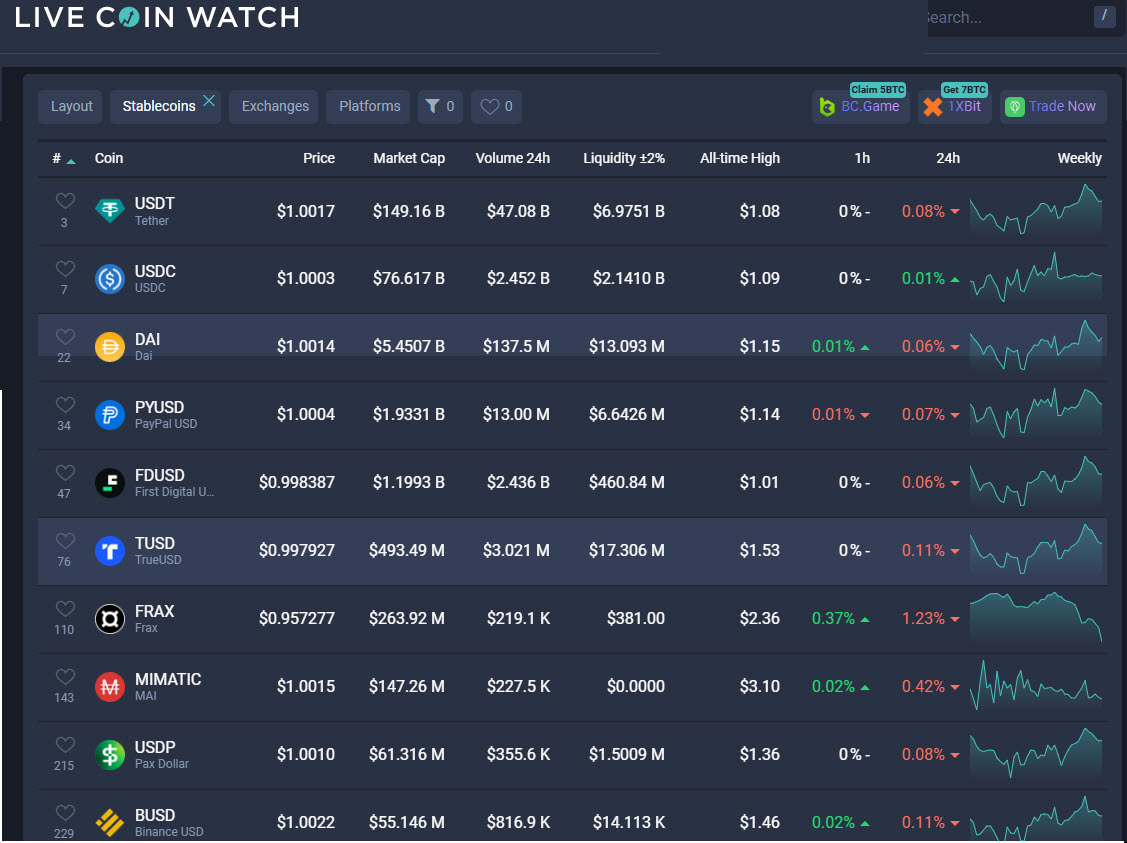
Because not all deposit tokens are equal, they may not be valued at par, or the face amount of the token. For example, the presence of an interest rate that is applied to the tokenized deposit balances will present an impediment to use as a clean form of payment. This is to say that merchants and individuals will desire a 4% token yield more than a 2% token yield. As such, each token may have a different price based on its attributes. Few stablecoins, that are not associated with a yield, trade at exactly par. Pricing for deposit tokens move even wider because of the value of yield, liquidity, and utility.
Because of this fact, this makes using deposit tokens as a form of payment problematic as no current payment platform adjusts for price of a token. While future payment platforms may adapt, the added complexity will likely not be embraced.
While tokenized deposits may not be an efficient payment mechanism, it will likely gravitate to being primarily used for a store of value.
Insight 6: Banks Should Consider a Duel Token Strategy
Because tokenized deposits will likely not be a liquid and efficient mechanism for payment, a bank will likely want to pursue a “duel token strategy” and issue both a stablecoin that will support payments and tokenized deposits to promote a store of value.
In this manner, banks will be able to shift deposit balances back and forth between the two in order to manage balance sheet liquidity.
Insight 7: Banks Will Need to Create Liquidity for Its Tokens
One important aspect of both tokenized deposits and stablecoin is the need for liquidity. Account holders will start to value the liquidity of the tokens increasingly over time. As such, many banks will choose to become liquidity providers for their customers and allow the exchange of their token into other tokens such as USDC (Circle) or Bank of America’s token as an example.
This will require a bank to hold multiple tokens for their own account in which to create liquidity for their token holders. As such, banks will be forced into a multi-currency world where accounting and risk management gets more complex.
Alternatively, banks may look to partner with exchanges and have them provide liquidity for a price as is most commonly done now.
Insight 8: Permissioned to Permissionless
Most banks will choose to start off in a closed or private permissioned structure where the bank controls the digital wallets and the chain. This places little additional burden on anti-money laundering (AML) and Know-Your-Customer (KYC) resources at the bank since this is largely the construct banks operate under now.
However, over time, banks will want to increase their liquidity for their tokens and look to start to transact on a public, or permissionless chain where the bank ceases to control the wallet or the chain.
Banks would do well to plan for this eventuality in choosing its partners or architecture. Banks may choose to bridge its token holders to another permissionless coin such as Circle’s USDC, may want to have a separate public coin on a public blockchain, or it may want to bridge its own coin to a public blockchain for certain use cases. Either way, thinking through the future now will help banks set strategy in this area.
Putting This into Action
If your bank is thinking about a tokenized deposit or stablecoin strategy, consider the above insights when you build out your program. A mistake would be to treat tokenization as you do your current accounts. There are aspects of tokenization that will usher in a new paradigm for money movement and storing value. The banks that will be most successful will lean in to take advantage of these new attributes of tokenization.
For more information, join our next free webinar on December 11th: