
Artemis II Lessons for AI-Assisted Bank Project Management

It is likely that your bank’s project management needs an AI upgrade. To learn how to do this we turned to NASA and studied the recent success of the Artemis II mission. In this article, and the free companion guide, AI-Driven Bank Project Management Lessons From Artemis II, we provide banks with an updated playbook of modern project management with the incorporation of AI, generative AI and agentic AI.
Bank Project Management Lessons From Artemis II
Artemis II wasn’t a “project.” It was a high-stakes, multi-system, no-excuses program where the cost of ambiguity was unacceptable. Banking initiatives may not carry astronauts to the moon, but modern programs (core modernization, LOS conversions, digital onboarding, tokenized deposits, enterprise AI rollouts) may not be optimized for the same reasons: decisions stay fuzzy, risk stays invisible, and governance becomes theater.
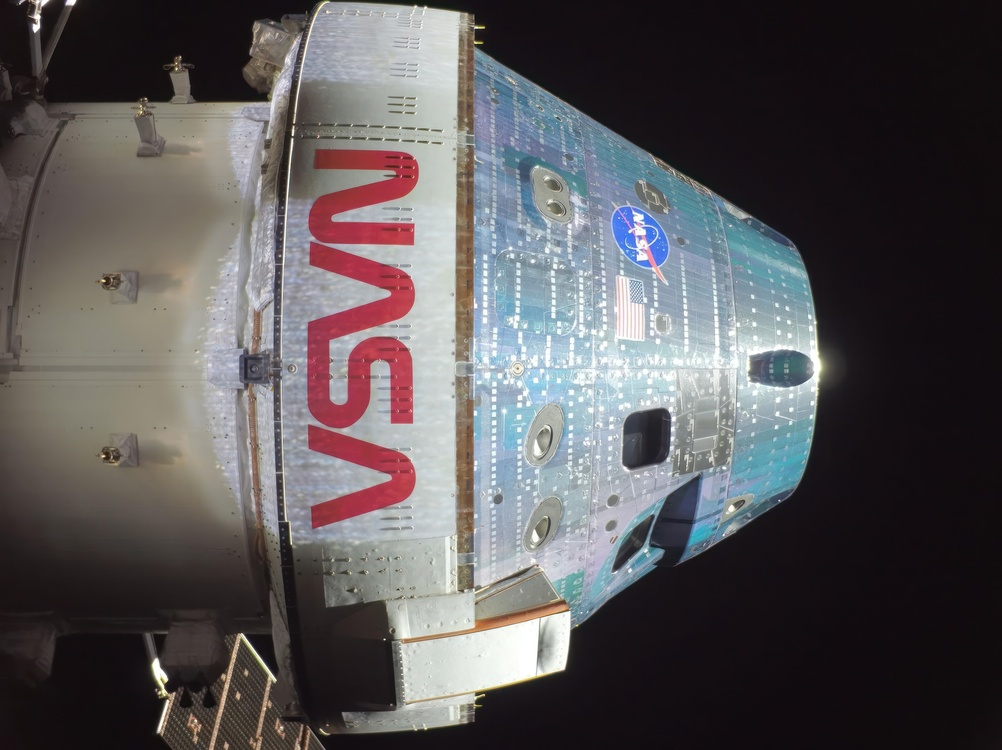 Now add one more accelerant: AI. In 2026, your bank can generate project plan updates, get more accurate dependencies, generate decks, minutes, requirements, test scripts, risk registers, and status narratives at machine speed. Using AI in project management is not just about productivity but increasing both the velocity of the project and the accuracy. Velocity without control simply helps your bank reach the wrong destination faster. The opportunity is to run AI-assisted, evidence-driven program management: agentic workflows that keep plans current, quantify drift, and make leadership decisions faster and cleaner than the competition.
What NASA (Artemis II) Gets Right—and Banks Can Copy
NASA doesn’t rely on heroic effort or “good people.” It relies on a discipline: a clear competency model for project leadership, rigorous review gates, and a bias toward decision clarity. We put together a free guide that takes Artemis II-era lessons and translates them into a banker-friendly execution operating system. We showcase how NASA, and other top performing project management teams are currently using AI, generative AI and agentic AI to reach better outcomes.
AI-Era Bank Project Management Moves For Executives, PMOs, and Business Leaders
Below are just some of the lessons we highlight in the guide.
- Make every meeting “mission control,” not “status updates.” If the pre-read doesn’t state the decision, options, recommendation, and consequence, cancel the meeting. Use AI to draft steering briefs in executive language (risk, revenue, ops, customer) and maintain an always-current decision log.
- Run budget, capacity, and timeline as one integrated model. Artemis doesn’t fund and schedule separately; banks shouldn’t either. Use AI to generate scenario trees (cost to buy down risk, cost of delay, capacity constraints) and force trade-offs into daylight.
- Deploy agentic AI as the program’s “nervous system.” Use agents to keep plans synchronized across workstreams, monitor dependencies, draft variance commentary, and route action items. The bank that does this well will outpace the bank that merely “uses AI to write summaries.”
- Gate on evidence, not optimism. The most common bank project failure mode is under allocating resources to discovery and then paying for it in testing. Use AI to assemble gate evidence packs (requirements, control design, test readiness, cutover) and automatically flag missing artifacts.
- Engineer operational flexibility on purpose. Every program should have a primary path, a constrained fallback, and a pause-and-redesign trigger. Let agents monitor assumptions and present project execution options. Leaders then decide when to pivot.
- Get ruthless: automate the paperwork, then raise the bar on accountability. Let generative AI not only handle minutes, checklists, and follow-ups, but have AI help humans understand the systemwide ramifications of any given meeting and decision set. Let AI help with the decision analysis, but then have AI track the humans accountable for decisions, signoffs, and exceptions. Speed without ownership is how banks manufacture invisible operational risk.
- Treat project leadership as a strategic capability. AI amplifies what you already are. If your governance is messy, you’ll get mess faster. If your PM discipline is strong, you’ll get clarity faster. The advantage is not “more PMO.” It’s a bank where sponsors, PMs, and line leaders share a common execution operating system.
Artemis II didn’t succeed because NASA had smarter people. It succeeded because NASA ran a system that forces clarity: explicit decision rights, continuous risk thinking, and evidence-based reviews. That’s exactly what most bank programs lack, and exactly what AI can amplify when you use it aggressively and correctly.
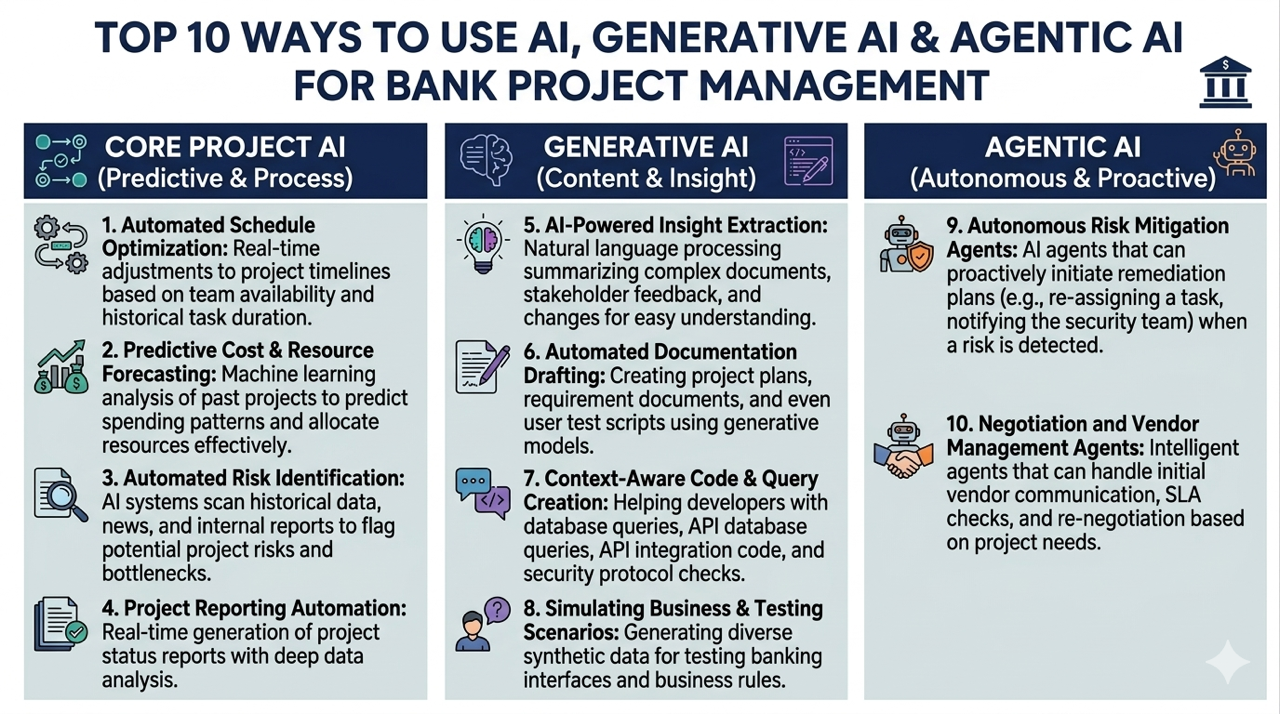
Download the bank project management guide to get the full Artemis II-to-banking translation, built on NASA’s Project Management Competency Model and updated for generative plus agentic AI. Specifically, you’ll get:
- The 10 best practices (communication, complexity/risk, budget/time trade-offs, vision, flexibility, decision-making, leadership, management discipline, problem solving, and PM as a distinct capability)—each translated into banking language.
- “Executive oversight questions” for every practice—so steering committees drive decisions and risk burn-down, not updates.
- Bank examples across onboarding, lending platform conversions, tokenized deposits, and enterprise AI rollouts.
- AI-in-practice patterns you can operationalize: agentic dependency monitoring, automated gate evidence packs, decision memo generation, variance commentary, and risk signal detection.
- Templates and artifacts you can copy: decision pack structure, risk profile format, and gate-readiness checklist concepts (the stuff teams actually use).
Ready to Run Bank Programs Like Artemis II?
- Download the guide if you want an execution playbook—not another AI strategy deck.
The full bank project management guide follows (HERE). Download the guide to share with your executive team, PMO, and line leaders.